India’s Zimbabwe T20I Squad Under Shreyas Iyer: Revisiting the July 2026 BCCI Call
On Monday 6 July 2026 the BCCI Men’s Selection Committee published India’s 15-man party for a three-match T20I series against Zimbabwe in Harare, with Shreyas Iyer named captain and Tilak Varma as vice-captain. Nearly a month on, the release still reads as a clean selection snapshot: a compact white-ball group, a fixed Harare schedule, and a linked ODI replacement note for the England series.
Compliance Notice: Come Sports is a skill-based fantasy sports platform operating in India. This product is available only to users 18+ in permitted states. Fantasy sports involve skill and strategy; outcomes depend on real-world match performance. Please play responsibly. Check local regulations before participating.
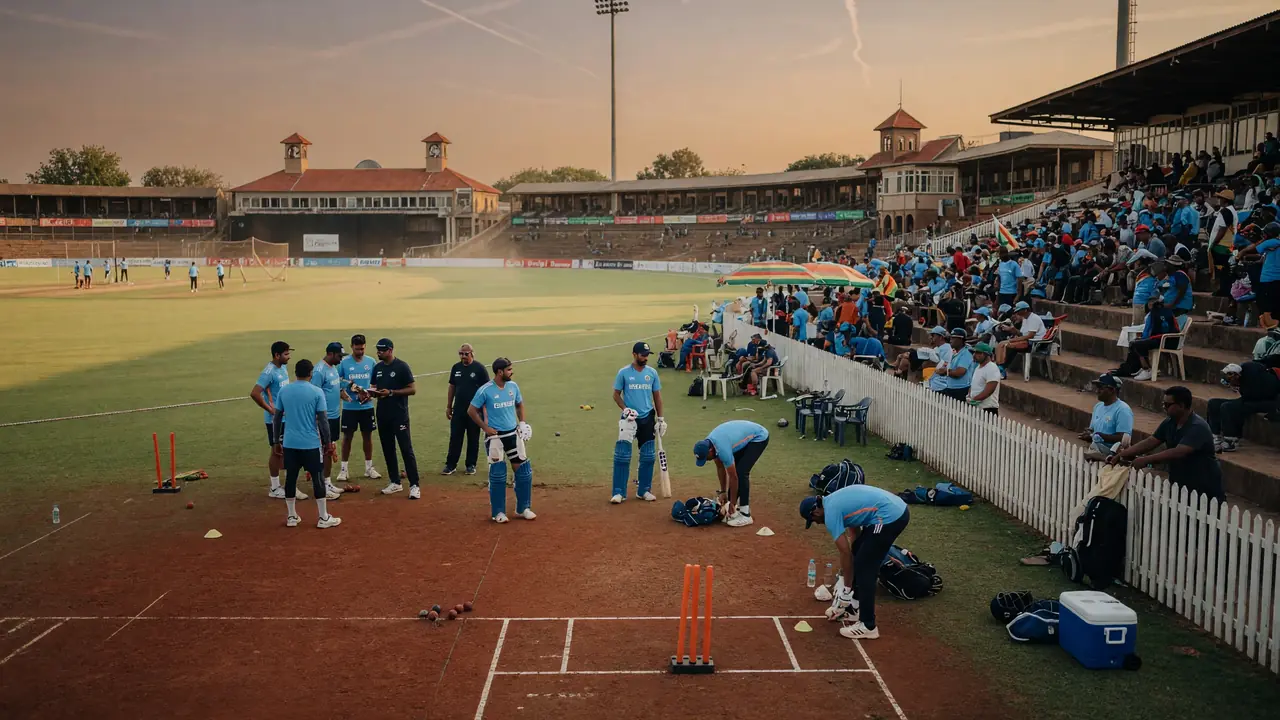
Harare hosted all three India–Zimbabwe T20Is listed in the BCCI’s 6 July 2026 media advisory.
The BCCI’s media advisory of Monday 6 July 2026 confirmed India’s squad for the Tour of Zimbabwe and set the frame for a short T20I assignment away from home. The Men’s Selection Committee named a 15-player group for three Twenty20 Internationals against Zimbabwe, all scheduled in Harare. Shreyas Iyer was appointed captain. Tilak Varma was named vice-captain. The same release carried an ODI update for England: Shivam Dube replaced Nitish Kumar Reddy in the 50-over side captained by Shubman Gill. The advisory was signed by Devajit Saikia, Honorary Secretary, BCCI.
This retrospective returns to that published list rather than to later match narratives. The value of the document, weeks after it first appeared, is structural. It shows how the board chose to staff a compressed bilateral T20I series, which leadership pair it trusted for the trip, which roles were doubled up, and which names were asked to balance national white-ball duty with a concurrent ODI path. For readers who follow franchise cricket as closely as the international calendar, the July call also maps onto familiar IPL batting and bowling identities without needing any claim the release itself never made.
What the 6 July advisory actually said
The core statement was brief and unambiguous. India had been picked for an upcoming three-match T20I series against Zimbabwe. Every fixture was listed for Harare. The captaincy line was explicit: Shreyas Iyer would lead, Tilak Varma would serve as his deputy. Two wicketkeepers were named inside the fifteen. Pace, spin and middle-order hitting were all represented, but the release did not grade the group as experimental, second-string or full-strength. It simply published the fifteen names and the schedule.
That restraint matters when the story is read in archive. Selection language often invites over-interpretation. Here the confirmed record stops at committee choice, leadership, venue and dates. There is no published ranking of the side, no quoted selector rationale, and no claim about expected series outcome. The cleanest way to handle the document is therefore to stay inside those boundaries: who was picked, who led, where the games were set, and what secondary ODI change travelled in the same note.
Publication timing also anchors the retrospective. The advisory carried a Monday 6 July 2026 stamp. By early August the Harare window listed in the same release — 23, 25 and 26 July — had already passed on the calendar. Reading the squad list after that window is not an attempt to rewrite the original announcement as fresh breaking news. It is a return to the selection sheet itself, with the original date kept in plain view.
Leadership pair: Iyer captain, Tilak Varma deputy
Shreyas Iyer’s appointment as T20I captain for the Zimbabwe tour was the headline administrative decision inside the release. Tilak Varma’s elevation as vice-captain completed the leadership pair. Both names already carried substantial franchise-cricket recognition in India’s domestic white-ball economy, which is why the call lands naturally inside a teams desk brief even though the assignment itself was a bilateral national series.
The release did not spell out a succession plan, a temporary arrangement, or a longer multi-series brief. It named the two leaders for this tour. That is the full extent of the confirmed leadership record. In practical terms, the pairing still shaped how the rest of the fifteen should be read. A captain drawn from the middle order and a deputy with top-order and middle-overs fluency suggested a batting-led command structure, while the bowling group around them retained a mix of wrist-spin, seam and death-phase pace without a second published leadership layer.
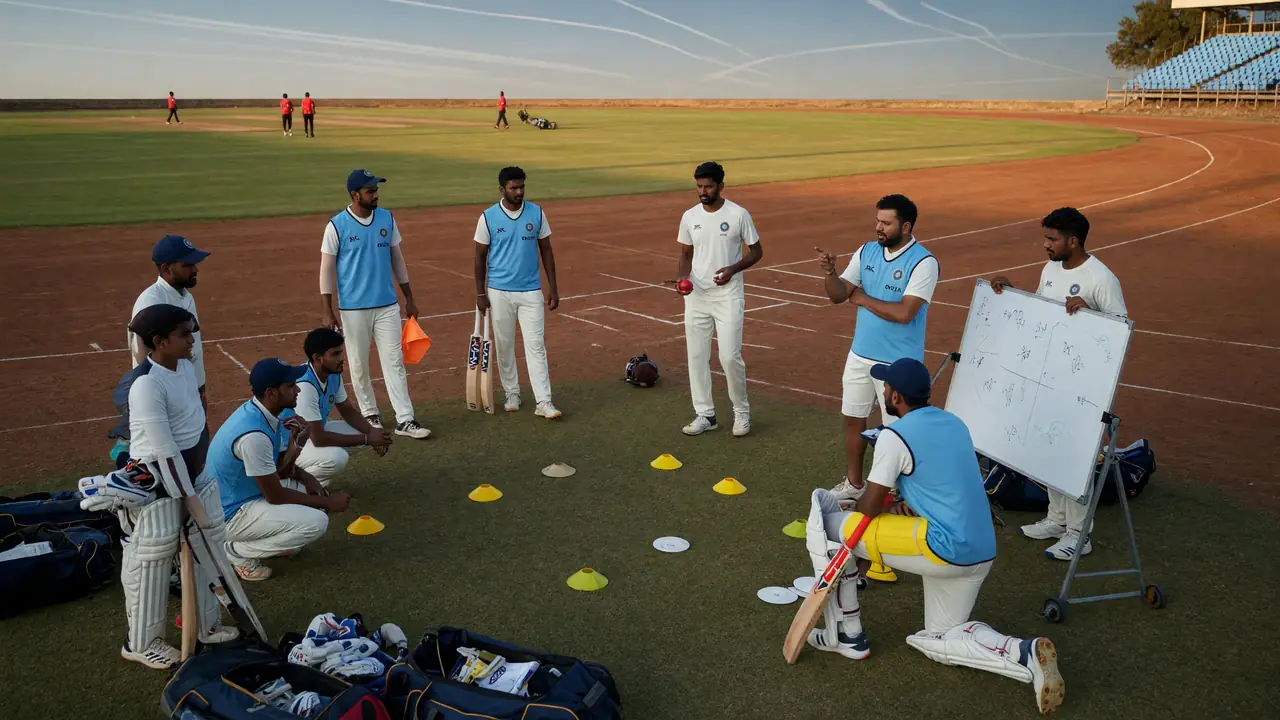
Middle-order power and top-order fluency sat at the centre of the batting names listed for Harare.
For franchise-facing readers, Iyer and Varma are also useful orientation points because their club identities are already well known across IPL coverage. The July call did not convert those club roles into national ones by prose; the board simply placed both men in charge of the tour party. The retrospective point is narrower: when the BCCI needed a captain and deputy for a three-match Harare assignment, those were the two names it put on the paper.
Broken into broad roles, the batting and keeping layer included Iyer, Sooryavanshi, Abhishek Sharma, Tilak Varma, Ishan Kishan, Shivam Dube, Suryansh Shedge, Rinku Singh and Prabhsimran Singh. That is a deep pool of left- and right-hand options, with two designated wicketkeepers and several hitters already familiar from IPL middle overs. The bowling and all-round layer featured Harsh Dubey, Varun Chakaravarthy, Prince Yadav, Yash Thakur, Ashok Sharma and Mayank Yadav, giving the party wrist-spin, seam and left-arm spin balance without requiring the release to define a first XI.
Several names carry immediate franchise recognition for Indian audiences. Abhishek Sharma’s powerplay aggression, Rinku Singh’s finishing reputation, Varun Chakaravarthy’s mystery spin, Mayank Yadav’s pace profile and Ishan Kishan’s keeping-batting package are all established storylines in club cricket. The BCCI list did not rank them. It simply assembled them in one national fifteen. The teams angle writes itself from that assembly: a short bilateral tour still drew heavily on players whose weekly visibility in India comes through franchise colours as much as Test or ODI hierarchy.
Two keepers inside fifteen is another structural detail worth holding. Ishan Kishan and Prabhsimran Singh were both tagged as wicketkeepers. The release did not declare a first-choice glovesman for Harare. It only confirmed redundancy in the role. That kind of duplication is common on short tours where injury cover and batting balance both matter, and it is one of the few tactical inferences that can be drawn without inventing selector quotes.
Harare schedule locked into three dates
The fixture table attached to the advisory left no ambiguity about venue or spacing. The first T20I was listed for Thursday 23 July 2026 in Harare. The second was listed for Saturday 25 July 2026 in Harare. The third was listed for Sunday 26 July 2026 in Harare. Three matches, one city, four calendar days from open to close once the series began.
That clustering is part of the historical record even when the piece is read after the dates have passed. A three-match series staged entirely in Harare compresses travel, acclimatisation and recovery into a single-host package. Back-to-back cricket on 25 and 26 July, after an opener on 23 July, also meant the squad had to be deep enough to absorb a quick turnaround at the end of the window. The published fifteen, with two keepers and multiple bowling options, fits that calendar shape even if the board never described the list in workload language.
Because every game was tied to Harare, the tour did not ask readers to track a multi-city itinerary. The selection story and the geography story were the same story: one squad, one host venue, three dated T20Is. For an archive brief, that simplicity is helpful. The verified itinerary can be restated without speculation about pitch behaviour, weather bands or expected totals, none of which appeared in the advisory.
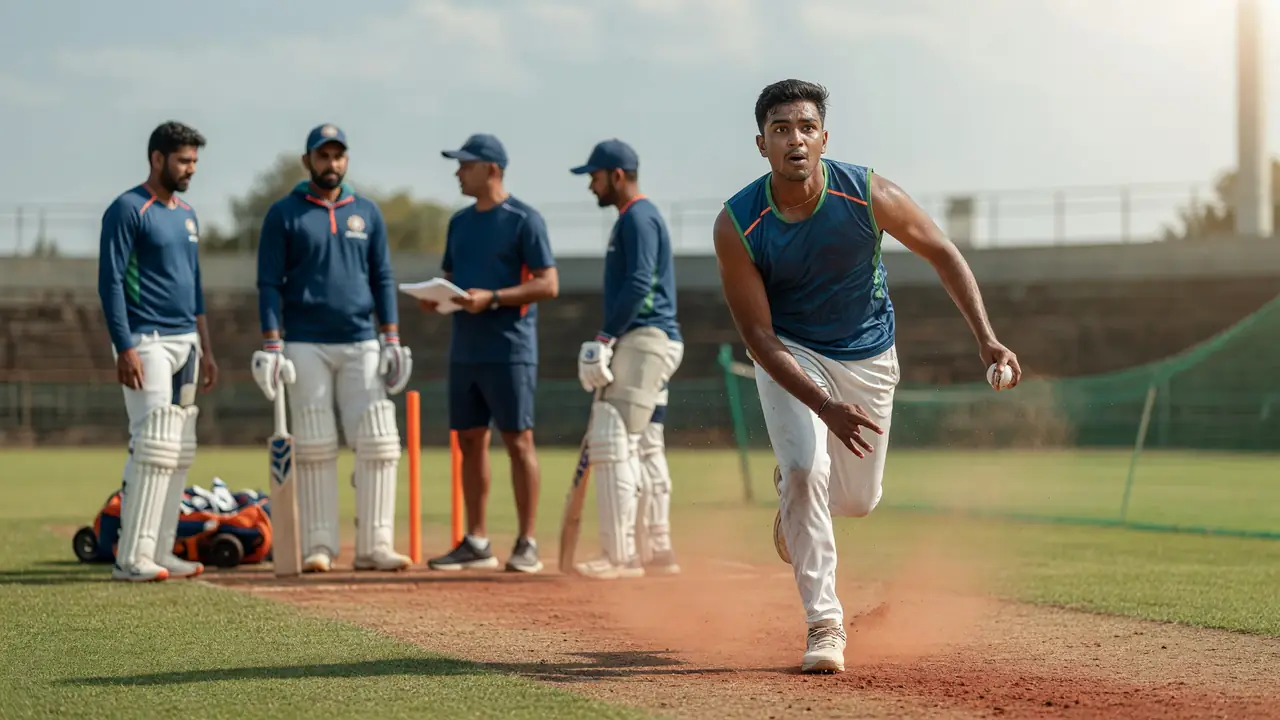
A short three-match Harare window asked the bowling group for quick turnarounds across consecutive nights.
The linked England ODI replacement note
The same BCCI release carried a second selection decision that did not belong to the Zimbabwe T20I list but travelled beside it. The Men’s Selection Committee named Shivam Dube as a replacement for Nitish Kumar Reddy in India’s ODI squad for the England series. The updated 50-over party was published in full: Shubman Gill (Captain), Rohit Sharma, Virat Kohli, Shreyas Iyer (Vice-Captain), KL Rahul (WK), Ishan Kishan (WK), Washington Sundar, Axar Patel, Kuldeep Yadav, Jasprit Bumrah, Prasidh Krishna, Harshit Rana, Arshdeep Singh, Gurnoor Brar and Shivam Dube.
That secondary list matters for two reasons. First, it shows Dube straddling formats in the board’s July paperwork: present in the Zimbabwe T20I fifteen and newly inserted into the England ODI fifteen. Second, it places Shreyas Iyer in a different leadership role on the ODI sheet, where he was listed as vice-captain under Shubman Gill rather than as tour captain. The contrast is documentary, not dramatic. One release, two leadership assignments, two formats.
The ODI names also underline how separate the Zimbabwe T20I group was from India’s senior 50-over core. Rohit Sharma, Virat Kohli, Jasprit Bumrah, Kuldeep Yadav and Axar Patel appeared on the updated England ODI list and not on the Zimbabwe T20I list. Readers should not overread that split as a formal hierarchy statement; the board simply staffed two assignments differently. Still, for anyone mapping national white-ball depth in mid-2026, the dual publication is a useful cross-section: a Harare T20I party under Iyer, and a fuller ODI group under Gill with Iyer as deputy and Dube as the named replacement for Reddy.
Why the call still matters for IPL team watchers
Come Sports readers who live inside franchise cricket often meet these players first in purple, blue, yellow or red rather than in India blues. The July Zimbabwe list is therefore less a remote bilateral footnote and more a national roll-call of club-stage talent. Abhishek Sharma, Rinku Singh, Varun Chakaravarthy, Mayank Yadav, Ishan Kishan, Prabhsimran Singh, Shivam Dube and Tilak Varma are all names that already structure weekly fantasy and squad conversation during the IPL. Seeing them grouped under one national captain clarifies how the board sampled that same talent pool for a short overseas T20I block.
The point is not to invent crossover statistics the advisory never supplied. It is to locate the release where Indian audiences actually encounter the players: at the intersection of franchise identity and national selection. A teams desk brief is the right home for that intersection. Squad construction, leadership choice, role redundancy and multi-format availability are the same questions club analysts ask when a franchise announces its final fifteen or its leadership group. The BCCI sheet answers those questions for one specific tour and one specific date.
Readers who want the broader franchise map — squad balances, head-to-head context and the way club roles travel into national white-ball sides — can move from this archive note into full IPL teams coverage. The July Zimbabwe list is one selection event; the franchise layer underneath those names is the longer story Indian fans already track match to match.
What the archive leaves unresolved
Honest retrospectives are defined as much by what they refuse to invent as by what they restate. The 6 July advisory did not publish a playing XI for any of the three Harare games. It did not identify a first-choice wicketkeeper. It did not explain why particular uncapped or lesser-capped names were preferred to omitted alternatives. It did not attach fitness notes, travel windows or return-to-IPL clauses. Those omissions are not defects in the reporting of the release; they are boundaries of the source.
Likewise, this brief does not reconstruct match results, player scores or series margins from outside the verified dossier. The assignment here is the selection document: the fifteen names, the leadership pair, the Harare dates, the Dube-for-Reddy ODI replacement, the Gill-led ODI list, and the Saikia signature line. Anything beyond that ceiling would be padding. The useful archive posture is to keep the ceiling visible.
Even inside those limits, the sheet remains dense. A captain and vice-captain were fixed. Two keepers were retained. Pace and spin were both stocked. A concurrent ODI change was announced without forcing the T20I party to absorb the full senior 50-over core. And the entire T20I itinerary was pinned to a single venue across three dated nights in late July. That is a complete selection story on its own terms.
How the July call sits in mid-2026 white-ball planning
Mid-year bilateral T20I series often function as calendar bridges rather than as standalone prestige events. The Zimbabwe assignment, as announced, fits that pattern: three games, one host city, a leadership pair drawn from the current white-ball generation, and a squad heavy on franchise-honed skills. Parallel to it, the England ODI list kept a more established 50-over spine under Shubman Gill, with Iyer as vice-captain and Dube added as replacement cover.
Reading both lists together is the most accurate way to remember the 6 July paperwork. India did not publish one universal white-ball fifteen. It published a Harare T20I group and an updated England ODI group on the same day, with limited but meaningful overlap through Iyer, Kishan and Dube. That dual structure is the historical fact. It also explains why a teams-oriented desk still returns to the release weeks later: the names on the T20I sheet are the same names that define club balances for large stretches of the Indian season.
The closing image from the document is administrative rather than theatrical. Devajit Saikia signed the advisory as Honorary Secretary of the BCCI. The title on the release was direct: India’s squad for the Tour of Zimbabwe announced. No additional flourish was required. Nearly a month on, the same plain facts still carry the story: Iyer captained, Tilak Varma deputised, fifteen players were named, Harare hosted on 23, 25 and 26 July, and Dube stepped into the England ODI side for Reddy. That is the July 2026 call as the board wrote it, and that is the record this retrospective keeps.
Frequently asked questions
When did the BCCI announce India’s Zimbabwe T20I squad?
The BCCI Men’s Selection Committee published the media advisory on Monday 6 July 2026, naming the 15-man party for the three-match T20I series against Zimbabwe.
Who captained India in the Zimbabwe T20I squad?
Shreyas Iyer was named captain and Tilak Varma was named vice-captain of the T20I side for the Harare series.
Where and when were the three T20Is scheduled?
All three matches were listed for Harare: the first on Thursday 23 July 2026, the second on Saturday 25 July 2026, and the third on Sunday 26 July 2026.
What ODI change was announced in the same release?
Shivam Dube replaced Nitish Kumar Reddy in India’s ODI squad for the England series. Shubman Gill remained ODI captain, with Shreyas Iyer listed as ODI vice-captain.
Ready to play fantasy cricket on Come Sports?
Join millions of Indian players. Rs 1 entry, Rs 8 Crore IPL 2026 prize pool, 2-minute withdrawals.