Fantasy Cricket on Come Sports: Strategy, Captain Picks, Bankroll Discipline
Master fantasy cricket on Come Sports with our in-depth guide. From team selection to captain picks, bankroll management, and contest strategy — everything you need to climb the leaderboard.
Compliance Notice: Come Sports is a skill-based fantasy sports platform operating in India. This product is available only to users 18+ in permitted states. Fantasy sports involve skill and strategy; outcomes depend on real-world match performance. Please play responsibly. Check local regulations before participating.
Start with the confirmed XI
The 30-minute window between XI announcement and toss is the most valuable 30 minutes in any fantasy tournament. Players who use this window well usually finish the tournament with a positive ROI; players who don’t usually finish with a negative ROI. The reason is simple: the confirmed XI is the only data source that doesn’t change after the toss, and every fantasy decision downstream of the XI depends on the XI being right.
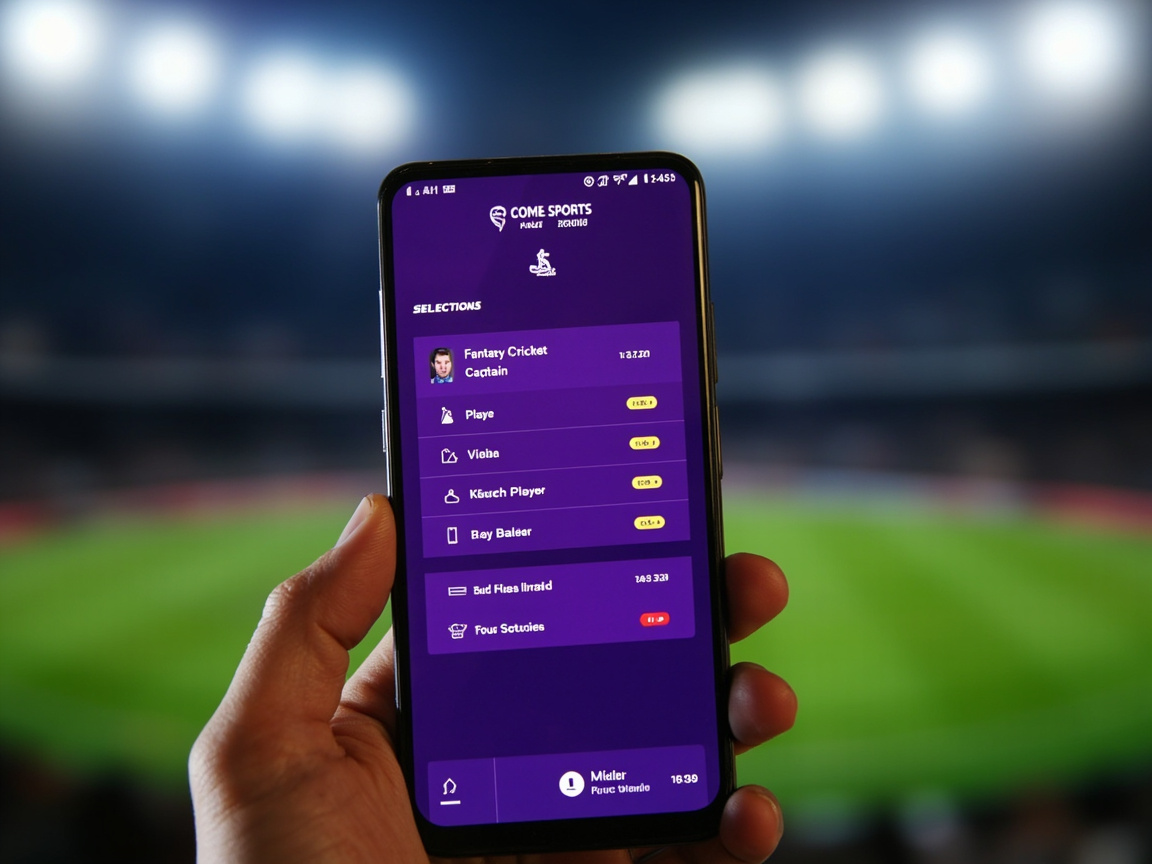
On Come Sports, the team selection screen locks 30 minutes before toss, giving you exactly that 30-minute window to react to the official XI. The screen shows role constraints (1-4 wicketkeepers, 3-6 batsmen, 1-4 all-rounders, 3-6 bowlers), credit value per player, and your current budget (Rs 100 crore).
The biggest mistake in this window is to commit a team before the XI is confirmed. Even if you have a strong pre-XI team, the post-XI team is usually different — a key player gets rested, an impact player is named, the pitch report changes the bowling type.
Role clarity and credit allocation
A common mistake is to spend the full Rs 100 crore budget on the first eleven, leaving no slack for the impact player or the transfer window. Reserve at least Rs 2-3 crore of unused budget so you can swap in a differential when the confirmed XI comes in.
Role clarity means picking players whose role matches the match situation. A top-order batsman in a chase is a different bet than a top-order batsman batting first on a flat pitch. The Come Sports player card shows the player’s recent role so the role match is a quick check.
Credit allocation means balancing the budget across roles, not concentrating it on one or two stars. A team with 6 stars and 5 fillers usually loses to a team with 4 stars and 7 solid role players.
Captain choice and the 2x multiplier
The 2x captain multiplier is the single most important decision in any fantasy contest, because it amplifies the entire performance of one player. A captain who scores 80 runs gives you 160 points; a captain who scores 30 gives you 60. Treat the captain pick as the highest-stakes decision in the contest.
Come Sports’s AI suggestion engine gives a captain recommendation based on 47 variables, but the recommendation is a starting point, not a final answer. Combine the AI suggestion with your own reading of pitch conditions, weather, and breaking team news.
A contrarian captain pick is the differentiator between the top 1% and the rest. In a mega contest with 50,000 entries, the captain pick that 30% of players make has a lower expected ROI than the captain pick that 5% of players make.
Venue reading and pitch behaviour
Pitch behaviour at the IPL 2026 venues falls into three rough categories: flat (Wankhede, Chinnaswamy, Eden Gardens), turning (Chepauk, Kotla, occasionally Lucknow), and seaming (Dharamsala, Guwahati, sometimes Mohali). The first category rewards batsmen; the second rewards spinners; the third rewards fast bowlers.
The Come Sports pitch report integrates data from the operator’s pitch database plus weather APIs, and the report is updated every 15 minutes during the match day. The report shows expected pitch type, dew factor, average first-innings score, and pace-vs-spin distribution.
Dew is the underrated factor in night IPL matches. A dew-affected pitch in the second innings is significantly easier to bat on, which means the team batting second (usually the chaser) has a structural advantage of 15-20 runs.
Toss impact and the chase-versus-bat decision
The chase-versus-bat decision is over-rated in casual fantasy circles and under-rated in serious ones. On flat pitches, chase wins more often than bat; on turning pitches, bat wins more often than chase. The tournament-wide chase rate in IPL 2026 sits around 52%.
Come Sports’s contest types reflect the chase-vs-bat split: head-to-head contests reward safe captain picks (chasing batsmen on flat pitches), while mega contests reward contrarian picks (first-innings batsmen on turning pitches).
The toss call is the most binary decision in fantasy cricket, and the post-toss team lock is the moment when the chase-vs-bat decision converts to a captain pick. Come Sports’s lock screen shows the toss result and the batting order within 2 minutes of the toss.
Contest types and how to allocate entry fees
The mega contest is the right home for a contrarian captain pick; the head-to-head contest is the right home for a safe captain pick. The mega contest rewards differentiation, so a captain pick that 5% of players make is more valuable than a captain pick that 30% of players make.
Come Sports offers five main contest types: mega (10,000+ entries, Rs 49 entry, Rs 8 Crore prize pool), small group (50-500 players, Rs 49-99 entry, 100x prize ratio), head-to-head (2 entries, Rs 10-100 entry, winner takes 90%), practice (free entry, bonus cash prizes), and private (custom entry, invite-only).
Bankroll discipline means capping the tournament spend at a fixed amount, not chasing losses. The recommended cap for an IPL tournament is 5-10% of disposable entertainment budget, and the cap is the difference between a sustainable hobby and a financial problem.
Bankroll discipline for the tournament
The right bankroll for an IPL tournament is the amount you’d spend on a week of entertainment, not the amount you’d spend on a financial investment. A common mistake is to deposit the maximum on day 1 and then try to recover the losses through higher entry fees — this is the path that turns fantasy into problem gambling.
Set a tournament budget, stick to it, and treat the deposit as a sunk cost the moment it’s made. The deposit limit tool on Come Sports is a system-level cap that prevents the deposit from exceeding the limit.
The bankroll allocation across the tournament matters as much as the total budget. A common allocation is 40% to the first 10 matches, 30% to the middle 30 matches, and 30% to the final 20 matches.
When to skip a match entirely
Skipping a match is a valid strategy when the match falls on a turning pitch with weak squads, or when the team news is too uncertain to support a confident captain pick. The cost of skipping is one entry fee saved; the benefit is no negative contribution to the leaderboard.
The Come Sports contest calendar shows all upcoming matches with their contest deadlines, and the calendar is the place to identify the matches worth skipping. A match on a turning pitch with two weak batting sides is usually a match to skip.
The skipping strategy works best when combined with a strong bankroll discipline. A player who skips the right matches and plays the right matches usually has a positive ROI on the played matches.
Frequently asked questions
What is fantasy cricket on Come Sports?
Fantasy cricket on Come Sports is a skill-based game where you create a virtual team of 11 real cricket players, score points based on their actual match performance, and compete against other players for cash prizes.
How is the Come Sports captain pick different?
Come Sports uses an AI-powered captain suggestion engine that analyses 47 variables including form, matchup, venue, weather, and pitch. The suggestion is a starting point, not a final answer — combine it with your own cricket knowledge for the best results.
Can I change my team after lock-in?
No — teams lock 30 minutes before the first ball is bowled. Use the transfer window during multi-day tournaments to swap injured or out-of-form players between matches.
Ready to play fantasy cricket on Come Sports?
Join millions of Indian players. Rs 1 entry, Rs 8 Crore IPL 2026 prize pool, 2-minute withdrawals.