Rohit Sharma Ruled Out of India's 2020 New Zealand Tour: Revisiting the BCCI Calf Strain Call
On 4 February 2020 the BCCI published a media advisory that closed Rohit Sharma’s New Zealand assignment early. A left calf muscle strain picked up in the fifth T20I at Tauranga forced the vice-captain out of the remaining white-ball fixtures and the two-Test series, with Mayank Agarwal named as ODI cover and a full Test squad listed under Virat Kohli.
Compliance Notice: Come Sports is a skill-based fantasy sports platform operating in India. This product is available only to users 18+ in permitted states. Fantasy sports involve skill and strategy; outcomes depend on real-world match performance. Please play responsibly. Check local regulations before participating.
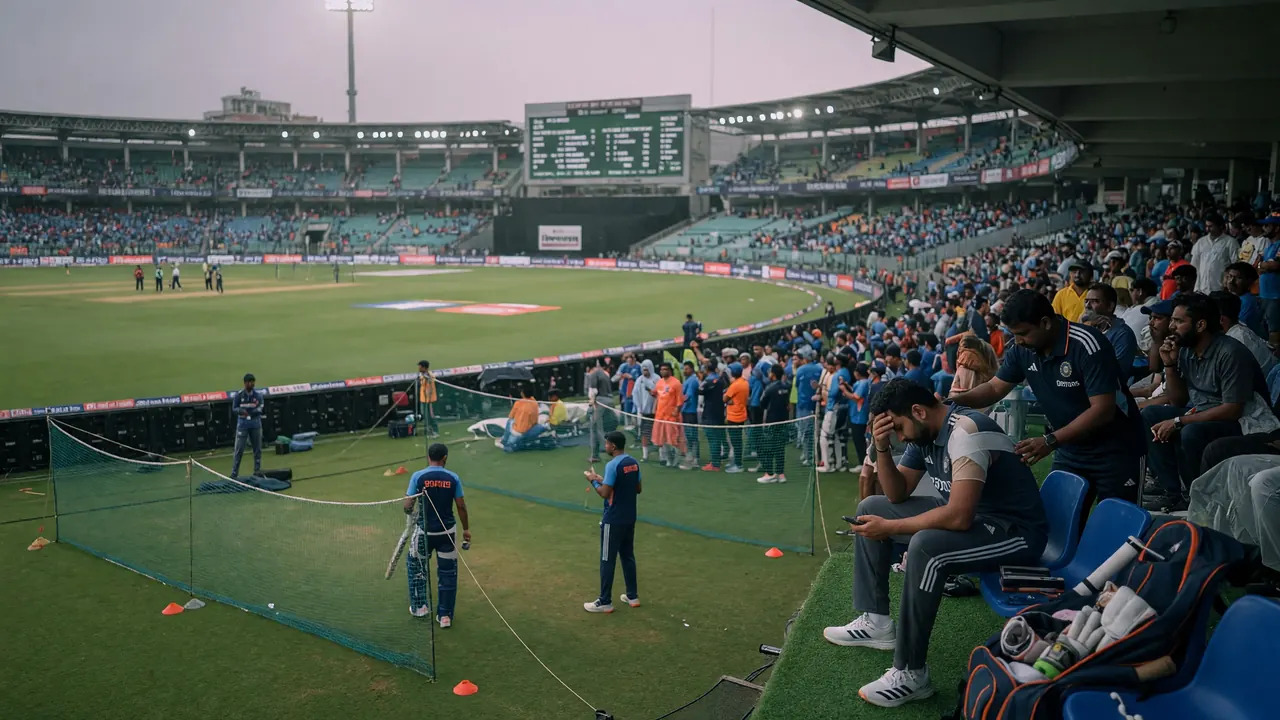
India’s 2020 New Zealand white-ball and Test assignment was reshaped after a calf injury forced Rohit Sharma home early.
The BCCI media advisory of 4 February 2020 confirmed that vice-captain Rohit Sharma had been ruled out of India’s remaining New Zealand tour. The injury was a left calf muscle strain sustained during the fifth T20I against New Zealand at Tauranga on the preceding Sunday. An MRI scan followed in Hamilton on Monday. The board then removed him from the upcoming ODI series and the two-match Test series and referred him to the National Cricket Academy for further injury management. The same release named Mayank Agarwal as Rohit’s ODI replacement and published the Test squad that would continue under Virat Kohli, with Ajinkya Rahane as vice-captain. The advisory was issued under Jay Shah, then Honourable Secretary of the BCCI.
This piece is a dated retrospective, not a live injury bulletin. The original source window sits in early February 2020. The facts below stay inside that BCCI advisory: the mechanism of the injury, the diagnostic step in Hamilton, the formats Rohit exited, the ODI replacement, the Test leadership pair, the full published Test party, and the NCA referral. Nothing outside that ceiling is invented here. For readers who follow Indian squad sheets as carefully as match days, the document still rewards a careful re-read because it shows how a single soft-tissue incident rewrote the rest of a multi-format tour in one administrative stroke.
How the injury closed Rohit’s New Zealand assignment
The chain of events inside the advisory is short and linear. Rohit Sharma, listed as India’s vice-captain on the white-ball leg, picked up a left calf muscle strain while playing the fifth T20I against New Zealand at Tauranga. The next day he underwent an MRI scan in Hamilton. Once the scan picture was in, the board’s decision covered every remaining competitive block on the trip: the ODI series still to come, and the two-Test series that followed. There was no staged return path written into the release. The wording was absolute for the rest of the tour.
That absolute language matters when the story is read years later. Selection and medical bulletins often leave room for day-to-day reassessments. Here the advisory did not. Rohit was out of the ODIs and out of the Tests. The medical destination was also fixed in the same sentence: further injury management at the National Cricket Academy. For a vice-captain who had already completed the T20I portion of the tour, the practical consequence was an early exit from New Zealand and a shift from match preparation to rehabilitation planning under NCA supervision.
The venue trail is part of the verified record as well. Tauranga was where the strain occurred. Hamilton was where the MRI was completed. Those two New Zealand cities bookend the medical half of the story before the administrative half takes over in the form of squad replacements and a Test list. Keeping those place names visible stops the retrospective from floating free of the original itinerary.
Mayank Agarwal named as the ODI replacement
With Rohit removed from the white-ball continuation, the All-India Senior Selection Committee named Mayank Agarwal in the ODI squad as his replacement. The advisory did not present Agarwal as a temporary net bowler or travelling reserve. He was the named ODI cover for the slot Rohit vacated. That is the full extent of the confirmed white-ball adjustment.
Agarwal’s presence on the sheet also links the white-ball and red-ball halves of the same release. He appears first as Rohit’s ODI replacement and again inside the Test squad published underneath. The board did not need two separate travellers to solve one absence across formats. One top-order batter absorbed the ODI vacancy and remained available for the Test group. From a squad-construction point of view, that is an efficient answer to a mid-tour injury, even though the advisory never described the choice in those managerial terms.
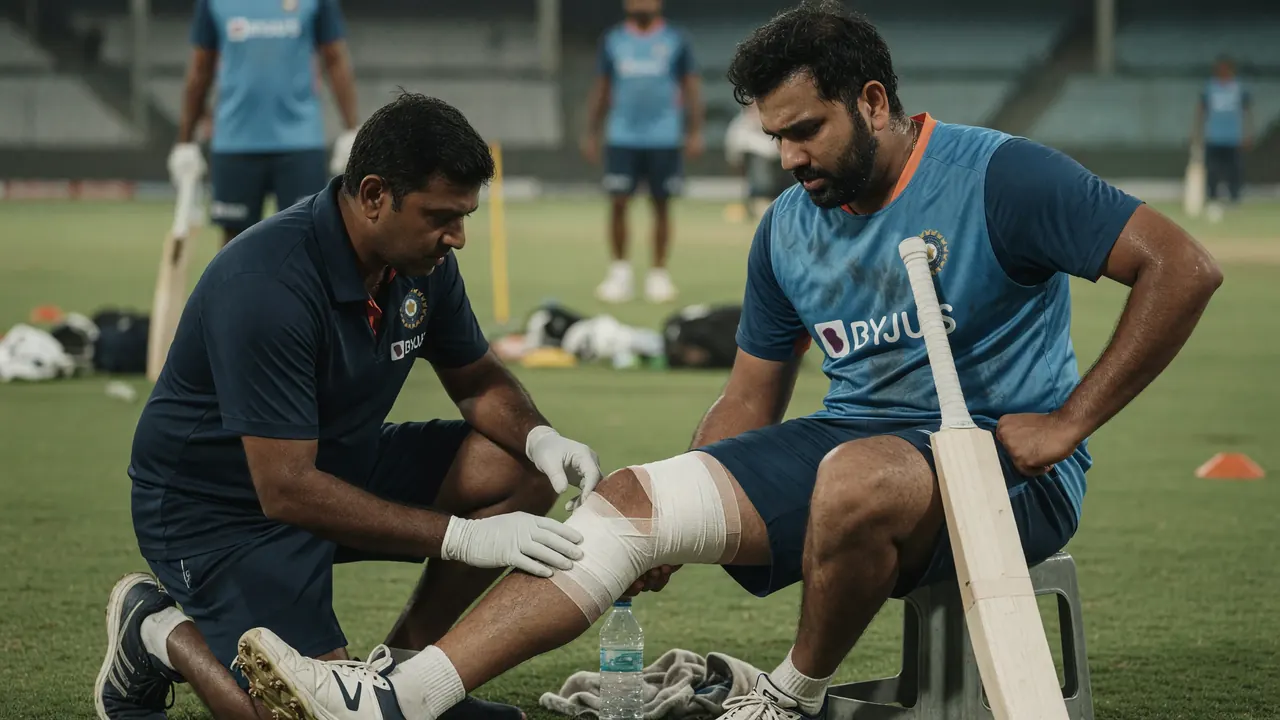
A mid-tour calf strain removed India’s white-ball vice-captain from both the remaining ODIs and the Test series.
What the release does not do is explain selector preference. There is no published shortlist of alternatives, no form note attached to Agarwal, and no statement about whether the ODI side would reshuffle roles around his inclusion. The clean archive posture is therefore limited: Rohit out, Agarwal in for the ODIs, same name retained for Tests. Readers who want broader contemporary selection chatter will not find it in this document, and this retrospective does not manufacture it.
Test leadership locked under Kohli and Rahane
Alongside the injury ruling, the BCCI used the same advisory to name India’s Test squad for the two-match series in New Zealand. Virat Kohli was confirmed as captain. Ajinkya Rahane was confirmed as vice-captain. Those two leadership lines are independent of Rohit’s white-ball vice-captaincy and should be read as the red-ball command structure for the Tests only.
The dual-leadership detail is easy to blur in later memory because Rohit himself would, in later years, become a multi-format captaincy centrepiece. In February 2020, on this specific sheet, the Test hierarchy was Kohli and Rahane. Rohit’s exit removed a senior batter from the touring pool, but it did not rewrite the published Test captaincy line. Keeping those roles separate is part of reading the advisory accurately rather than folding every India leadership thread into one story.
The series length was also explicit: a two-match Test assignment. The advisory did not attach venues, start dates or a reserve-day note in the factual ceiling used here, so those details stay outside this brief. What remains is the administrative package: two Tests, Kohli leading, Rahane as deputy, and a named fifteen-plus group around them with one fitness caveat on Ishant Sharma.
The full Test party published on 4 February 2020
The listed Test squad, as carried in the advisory, included Mayank Agarwal, Prithvi Shaw, Shubman Gill, Cheteshwar Pujara, Hanuma Vihari, Wriddhiman Saha, Rishabh Pant, R. Ashwin, Ravindra Jadeja, Jasprit Bumrah, Umesh Yadav, Mohd. Shami, Navdeep Saini, and Ishant Sharma subject to fitness clearance. Kohli and Rahane headed that group as captain and vice-captain. Together those names formed the red-ball party that would continue after the white-ball leg had already been disrupted by Rohit’s calf strain.
Read as a structure rather than a headline, the list balances several ordinary Test requirements. The top order mixed established names with younger openers and middle-order options. Two wicketkeeping options, Saha and Pant, sat inside the same party. The spin pair of Ashwin and Jadeja covered off-spin and left-arm orthodox all-round work. The pace group stacked Bumrah, Shami, Umesh Yadav, Navdeep Saini and Ishant Sharma, the last of them flagged as contingent on fitness clearance rather than confirmed without caveat.
That fitness tag on Ishant is one of the few conditional notes in an otherwise decisive release. Rohit’s status was settled: ruled out, referred to the NCA. Ishant’s status was provisional: named, but subject to clearance. The contrast shows how the board handled two different medical pictures inside one document. One player was already exiting the tour. Another remained inside the Test frame pending a separate fitness gate.
Shubman Gill’s presence on the same sheet is another archival marker. In early 2020 he was still being packed into overseas Test parties as part of India’s longer batting succession rather than as the finished multi-format leader later audiences would recognise. The advisory does not narrate that arc. It simply places Gill among the batters available for the two New Zealand Tests. The retrospective value is documentary: this is where his name sat on the official list the day Rohit was ruled out.
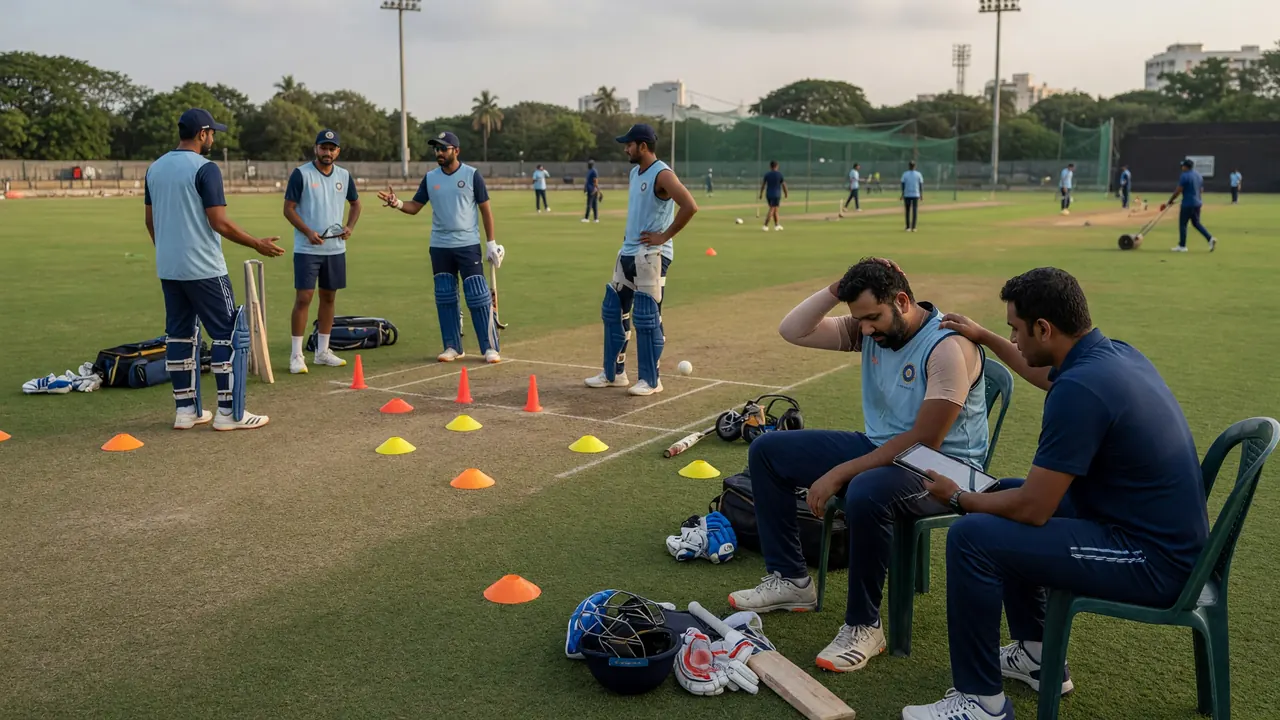
The BCCI used the same advisory to publish India’s two-Test squad under Virat Kohli after the white-ball injury update.
What the NCA referral signalled
Referral to the National Cricket Academy was the medical destination attached to Rohit’s exit. The advisory did not publish a recovery timeline, a projected return date, or a list of treatments. It only confirmed that further injury management would sit with the NCA after the calf strain and the Hamilton MRI. In board language, that usually moves a player from tour medical care into a centralised rehabilitation pathway, but the February 2020 note does not spell out protocols, imaging follow-ups or bowling/batting milestones.
For archive readers, the useful restraint is to leave those blanks blank. A calf strain severe enough to end a multi-format tour is already a significant soft-tissue event. Adding guessed lay-off windows or imagined gym progressions would only dress the story in certainty the source never offered. The verified medical sequence stops at strain, MRI, tour exit and NCA referral.
The same restraint applies to performance speculation. The advisory does not say how the injury changed India’s ODI batting order, who would open in Rohit’s absence, or whether the Test side felt thinner for his unavailability. Those questions belong to match coverage and later analysis. This brief stays with the selection paper: one senior batter removed, one named ODI replacement, one Test squad published, one academy pathway opened.
Why the February 2020 sheet still earns a place in the archive
Mid-tour injury bulletins are easy to treat as disposable once the next series begins. This one still earns shelf space because it compresses several durable selection themes into a single page. It shows a vice-captain exiting every remaining format on a tour rather than only the next fixture. It shows a like-for-like top-order replacement named in ODIs without a wider white-ball rewrite. It shows Test leadership held stable under Kohli and Rahane while the batting pool around them absorbed the absence. And it shows the NCA used as the formal next stop once a touring MRI had confirmed the problem.
For Come Sports readers who track Indian cricket through squad sheets as much as scorecards, those themes remain familiar. Soft-tissue injuries still rearrange white-ball parties. Openers still double as multi-format cover. Test lists still carry fitness caveats on fast bowlers. Academy referrals still mark the boundary between tour medicine and longer management. The February 2020 advisory is one clean primary-source example of all four patterns arriving together.
It also sits at a useful historical hinge. Several names on the Test list — Gill, Pant, Bumrah, Jadeja, Agarwal — would define large stretches of India’s next half-decade. Rohit himself would later captain across formats. None of that future is claimed by the 4 February document. The document only freezes one administrative morning: Rohit ruled out, Agarwal elevated for ODIs, Kohli and Rahane set for the Tests, Ishant pending clearance, Jay Shah signing for the board. Holding the freeze carefully is the point of a retrospective.
Readers who want surrounding match desks, later injury notes and current squad chatter can move from this archive item into the wider Come Sports cricket news coverage. The February 2020 call is one sealed selection event; the broader newsroom is where subsequent Indian cricket threads continue.
Boundaries of the verified record
Honest archive writing is defined by the edges it refuses to cross. The BCCI advisory used here does not publish the full ODI fifteen beyond the Agarwal replacement note. It does not list ODI or Test venues inside the factual ceiling retained for this brief. It does not quote medical staff, selectors or Rohit himself. It does not grade the severity of the calf strain beyond the consequences already stated: out of ODIs, out of Tests, sent to the NCA. It does not supply a return-to-competition date.
Those omissions are not gaps to be filled with colour. They are the walls of the source. Inside the walls, the story is already complete enough. A left calf muscle strain at Tauranga led to an MRI in Hamilton, a multi-format tour exit, an ODI replacement, a Test squad announcement and an academy referral, all under one media advisory dated 4 February 2020 and issued in the name of Jay Shah as Honourable Secretary, BCCI.
Six years on, the plain sequence still reads cleanly. Rohit Sharma’s New Zealand tour ended after the T20I leg because of a calf injury. Mayank Agarwal stepped into the ODI vacancy. Virat Kohli and Ajinkya Rahane took the Test leadership lines. The red-ball party around them mixed seasoned batters, two keepers, twin frontline spinners and a deep pace unit with Ishant Sharma’s place marked subject to fitness. That is the February 2020 call as the board wrote it, and that is the record this retrospective keeps.
Frequently asked questions
When did the BCCI rule Rohit Sharma out of the New Zealand tour?
The BCCI media advisory is dated 4 February 2020. It confirmed that Rohit Sharma had been ruled out of the remaining New Zealand assignment after a left calf muscle strain.
How did Rohit Sharma pick up the injury?
He sustained a left calf muscle strain during the fifth T20I against New Zealand at Tauranga on the Sunday before the advisory, then underwent an MRI scan in Hamilton on Monday.
Which parts of the tour did he miss?
He was ruled out of the upcoming ODI series and the two-match Test series and was referred to the National Cricket Academy for further injury management.
Who replaced Rohit Sharma in the ODI squad?
The All-India Senior Selection Committee named Mayank Agarwal in the ODI squad as Rohit’s replacement.
Who led India’s Test squad for New Zealand?
Virat Kohli was named captain and Ajinkya Rahane vice-captain. The published party included Mayank Agarwal, Prithvi Shaw, Shubman Gill, Cheteshwar Pujara, Hanuma Vihari, Wriddhiman Saha, Rishabh Pant, R. Ashwin, Ravindra Jadeja, Jasprit Bumrah, Umesh Yadav, Mohd. Shami, Navdeep Saini, and Ishant Sharma subject to fitness clearance.
Ready to play fantasy cricket on Come Sports?
Join millions of Indian players. Rs 1 entry, Rs 8 Crore IPL 2026 prize pool, 2-minute withdrawals.