Hashmatullah Shahidi Steps Down as Afghanistan ODI Captain After India Series
Afghanistan's ODI leadership changes hands with immediate effect. Hashmatullah Shahidi ends a tenure that began in January 2022, leaves a 27-win ledger from 55 matches, and keeps his place in the middle order as the board prepares a new appointment before next month's series in Ireland.
Compliance Notice: Come Sports is a skill-based fantasy sports platform operating in India. This product is available only to users 18+ in permitted states. Fantasy sports involve skill and strategy; outcomes depend on real-world match performance. Please play responsibly. Check local regulations before participating.
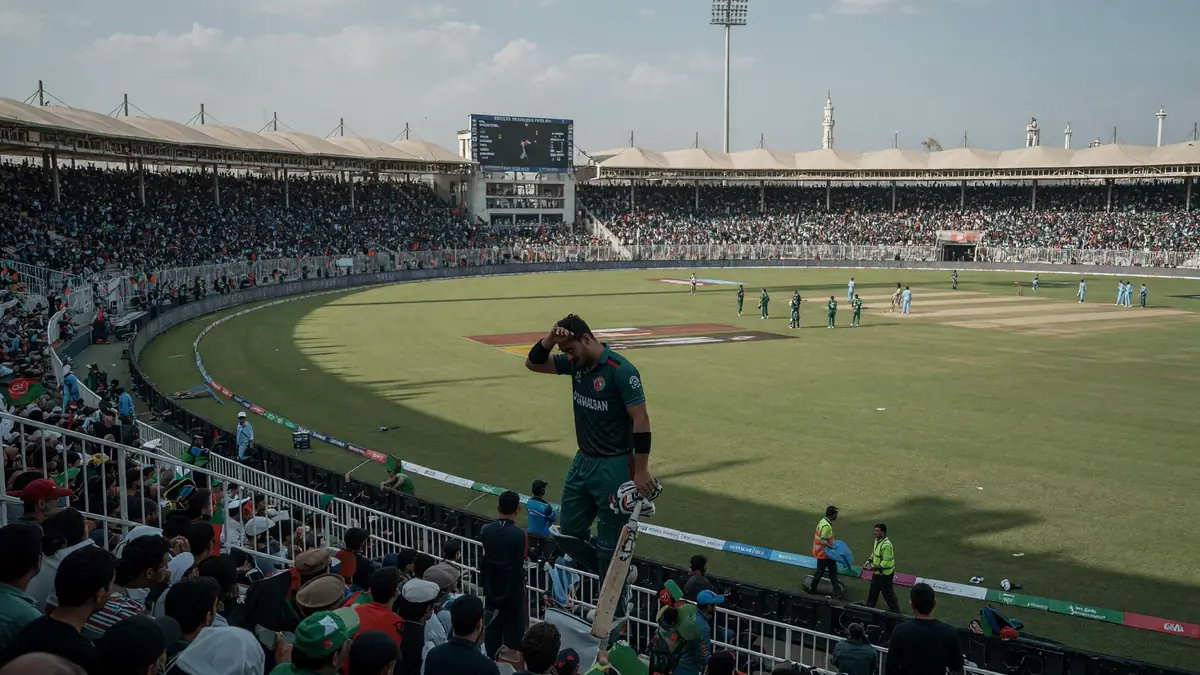
Afghanistan's fifty-over side enters a fresh captaincy cycle after Shahidi's immediate resignation.
Hashmatullah Shahidi is no longer Afghanistan's ODI captain. The decision takes effect immediately and closes a leadership run that started in January 2022 — four and a half years in charge of the national fifty-over side. Reporting first carried by The Times of India places the announcement after Afghanistan's 3-0 ODI series defeat to India the previous month, a clean sweep that bookended his time with the armband rather than defining the entire stretch of it.
Shahidi did not frame the move as a break from the dressing room. On Instagram he thanked management, coaches, teammates and supporters, then stated plainly that he will keep playing for Afghanistan and wants the next captain and the group to succeed. For a side that has spent the last World Cup cycle converting reputation into results, the practical question is not whether he stays in the middle order — he does — but how the Afghanistan Cricket Board fills the vacant captaincy before a five-match ODI series in Ireland next month.
Why the timing sits after the India whitewash
Leadership changes rarely arrive in a vacuum. The most recent marker on Afghanistan's ODI calendar was a 3-0 loss to India. Series whitewashes against full-member opposition put pressure on selection, bowling plans and batting depth at once, and captaincy is the most visible role attached to those conversations. Shahidi's resignation, arriving in the weeks after that series rather than mid-tournament, gives the board a window to settle the next appointment without interrupting a live bilateral programme.
That window is short. The same report that confirmed the resignation said the board is expected to name a successor before Afghanistan travel for five ODIs in Ireland. Five matches is enough cricket for a new captain to establish field settings, bowling changes and batting order habits before the next block of international fixtures. It is also enough for the group to test whether the handoff feels like continuity or a hard reset.
Readers in India will recognise the pattern from other boards: a difficult bilateral, a senior player stepping aside from leadership while remaining available as a batter, and a home or away series used as the proving ground for the next voice in the huddle. The facts available today stop at the expectation of an announcement before Ireland. No successor has been named in the reporting that underpins this piece.
The ledger: 55 ODIs, 27 wins, and a higher floor for Afghanistan
Numbers are the cleanest way to measure the span. As captain, Shahidi led Afghanistan in 55 ODIs and won 27 of them. A win rate just under half does not, on its own, explain why his tenure is being described as one of the more productive periods in the country's fifty-over history. The context sits in the quality of opposition and the stages at which results arrived.
Under his watch Afghanistan pushed deep into the 2023 ODI World Cup, beating England, Pakistan, Sri Lanka and the Netherlands along the way and finishing just short of the semi-finals. Those four wins against a mix of established and associate opposition changed how other boards planned for Afghanistan. A side once treated as a short-format specialist forced full-member teams to treat fifty-over meetings as genuine contests rather than scheduling filler.
That World Cup run also carried a structural prize. Qualification pathways from the 2023 tournament fed into the 2025 Champions Trophy. Afghanistan used that place to beat England again at the Champions Trophy before a washed-out match against Australia closed their route to the semi-finals. Rain denied a result, but the campaign still confirmed that the 2023 group-stage form was not a one-off spike.
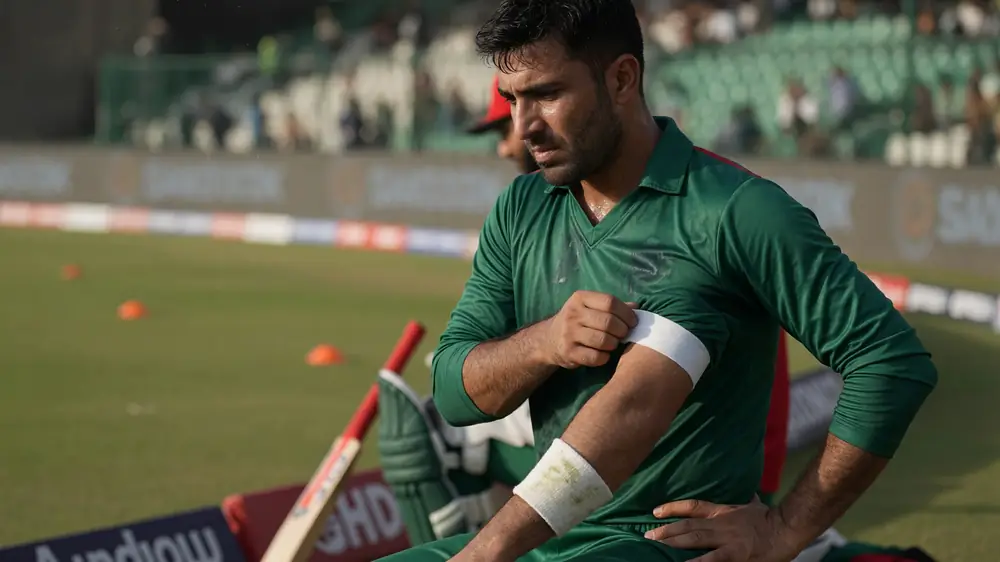
The armband moves on; Shahidi says he will keep playing for Afghanistan as a senior batter.
Series wins that quietly raised the baseline
World Cups dominate memory. Bilateral series build the habits that make World Cup cricket possible. Across Shahidi's captaincy Afghanistan collected ODI series victories over Bangladesh, Zimbabwe, South Africa and Ireland. Those four names matter for different reasons. Bangladesh and Ireland are frequent subcontinental and associate rivals where Afghanistan has historically needed consistency rather than one inspired day. Zimbabwe remains a useful measuring stick for depth. South Africa, even in rotated or rebuilding windows, is a full-member benchmark that still carries weight on a resume.
Series wins do not guarantee knockout cricket. They do, however, change internal expectations. A dressing room that has beaten South Africa in an ODI series approaches a later World Cup pool with a different baseline confidence than a side still hunting its first full-member bilateral. Shahidi's public message on resignation — gratitude without bitterness, availability without clinging to the armband — fits a captain who can point to that baseline and step aside without rewriting the story of the last four years.
What Shahidi said when he walked away from the armband
The resignation was confirmed on Instagram rather than through a long press-conference transcript. In that post, as reported by The Times of India, Shahidi thanked management, coaches, teammates and supporters. He also made the playing future clear: he will continue turning out for Afghanistan and wants the new captain and the team to succeed.
That second clause is operationally important. When a captain resigns and retires from the format in the same breath, selectors rebuild the middle order and the leadership group together. When a captain resigns and stays, the board can treat the role change as a leadership adjustment rather than a batting overhaul. Afghanistan still need Shahidi's runs; they are choosing a different voice to set fields and speak at the toss.
Nothing in the available reporting assigns blame to a single teammate, coach or administrator. The statement is final on the captaincy question and open-ended on everything else. For Indian readers watching Afghanistan through the fantasy and bilateral lens, the practical reading is simple: value Shahidi as a batter on form and role, not as an automatic captaincy premium, until the board names the next leader and clarifies any knock-on changes to the batting order.
A century in Chennai as the final act in charge
There is a neat sporting full stop to the tenure. Shahidi's only ODI hundred — 102 against India in Chennai — came in his last match as captain. Centuries against India on Indian pitches are rare currency for visiting batters. That it arrived in a series Afghanistan lost 3-0 does not erase the personal landmark; it does, however, underline the gap between individual resistance and collective result that often precedes a leadership change.
For Afghanistan's batting group, the innings is a reminder that Shahidi still occupies a high-value middle-order slot against high-quality seam and spin. For the captaincy conversation, it is a reminder that personal form and team leadership are related but not identical jobs. Boards sometimes strip the armband from a batter who is out of runs. Here the armband leaves a batter who has just posted a career ODI high against the side that whitewashed his team.
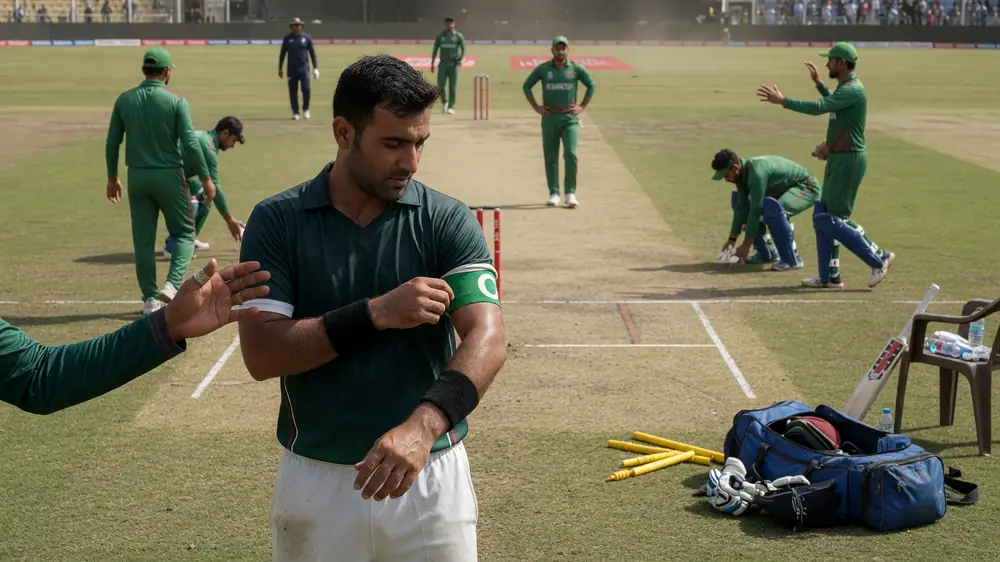
Field plans and bowling changes will sit with a new ODI captain once the board confirms the appointment.
What the next captain inherits
Any successor steps into a side with a clearer ODI identity than Afghanistan carried a decade ago. The bowling attack still revolves around high-class spin and disciplined seam options capable of defending or chasing middle totals. The batting unit has enough experience through the top and middle to absorb early wickets without collapsing every time. The World Cup near-miss in 2023 and the Champions Trophy win over England in 2025 give the group reference points for pressure cricket that earlier Afghan sides lacked.
The open items are leadership texture rather than raw talent lists. Who speaks at the toss. Who manages the fifth-bowler overs when match-ups turn. Who decides whether to bowl spin through the middle or hold a seamer for the death. Those are captain's choices even when coaches supply the plans. A five-match series in Ireland is a controlled environment for testing those choices: seam-friendly conditions, a familiar opponent from Shahidi's series-win list, and enough games for patterns to appear without the glare of a global event.
Until the board names the captain, public speculation about individuals is guesswork. The verified expectation is only that an appointment should come before that Ireland tour. Anything beyond that — whether the new captain is a regular opener, a middle-order batter, or a senior bowler — is not established in the source material available for this report.
How Indian fantasy players should read the handoff
Captaincy changes move fantasy values even when batting roles stay put. A new Afghanistan ODI captain may reshuffle bowling shares, promotion for a floater, or the use of part-time options in the middle overs. Those micro-shifts matter more in head-to-head and small-league contests than in large multi-entry fields, but they matter nonetheless once the Ireland fixtures are locked on the Come Sports schedule.
Shahidi himself should be evaluated first as a batter with recent evidence of a hundred against India, not as a locked captaincy marker. Availability looks secure based on his own statement. Form against Ireland historically sits inside a series Afghanistan have won under his leadership, which is context rather than a guarantee of fresh runs. Wait for the confirmed XI and the named captain before loading captain percentages on any Afghanistan player for the first Ireland ODI.
Broader India-facing readers who follow Afghanistan mainly through World Cup nights now have a simpler storyline to track: a respected senior steps back from leadership, stays in the eleven, and the board uses a five-match away series to install the next voice. For ongoing match notes, squad lists and fantasy-facing cricket updates, open the Come Sports cricket news desk as the Ireland series approaches.
What is confirmed — and what is not
Confirmed from the Times of India report dated 22 July 2026: Shahidi has resigned as Afghanistan ODI captain with immediate effect; the role began in January 2022; the decision follows the 3-0 ODI series loss to India last month; he captained 55 ODIs with 27 wins; he announced the move on Instagram with thanks to staff, teammates and fans; he will continue as a player; under him Afghanistan nearly reached the 2023 World Cup semi-finals after wins over England, Pakistan, Sri Lanka and the Netherlands; that campaign helped them into the 2025 Champions Trophy, where they beat England before a washout against Australia ended their semi-final path; he led series wins over Bangladesh, Zimbabwe, South Africa and Ireland; his sole ODI century, 102 versus India in Chennai, came in his final match as captain; the Afghanistan Cricket Board is expected to name a new ODI captain before a five-match ODI series in Ireland next month.
Not confirmed in that reporting: the identity of the next captain, any change to coaching staff, any formal performance review text from the board, or a detailed breakdown of dressing-room discussions after the India series. Those gaps should stay gaps until primary sources fill them. Filling them with rumour would only muddy a clean leadership story.
The road into Ireland
Next month's five ODIs in Ireland are now the first public test of Afghanistan's post-Shahidi captaincy era, whenever the board completes the appointment. Ireland know this opponent well enough to avoid early shock; Afghanistan know Ireland well enough to expect a competitive, seam-influenced series rather than a procession. For Shahidi, the tour is a chance to bat without the toss and the press duties. For his successor, it is a chance to set a tone before heavier assignments return to the calendar.
Four and a half years is a long stint in modern white-ball captaincy. Shahidi leaves the role with a World Cup near-miss, a Champions Trophy win over England, multiple bilateral series trophies, a personal hundred against India, and a public commitment to keep playing. The armband moves on. The middle-order problem for opposing captains does not.
Frequently asked questions
When did Hashmatullah Shahidi become Afghanistan's ODI captain?
He took charge of the ODI side in January 2022 and held the role until his resignation with immediate effect in July 2026 — a span of about four and a half years.
What were Shahidi's results as ODI captain?
He led Afghanistan in 55 ODIs and won 27 of them. The side also collected series wins over Bangladesh, Zimbabwe, South Africa and Ireland during his tenure.
Is Shahidi retiring from ODIs?
No. In his Instagram statement he said he will continue playing for Afghanistan and wished the new captain and the team success.
When will Afghanistan name the next ODI captain?
The Afghanistan Cricket Board is expected to announce a new ODI captain before the team's five-match ODI series in Ireland next month. No name has been confirmed in the reporting cited here.
What was Shahidi's last match as captain?
His final match as captain was against India in Chennai, where he scored 102 — his only ODI century — during a series Afghanistan lost 3-0.
Ready to play fantasy cricket on Come Sports?
Join millions of Indian players. Rs 1 entry, Rs 8 Crore IPL 2026 prize pool, 2-minute withdrawals.